On February 25, 2023, I was invited as a guest speaker to a youth gathering at Kohna Qasim Bagh. The goal was to discuss interfaith harmony and how young people can help build peace and prevent violent extremism (CVE/PVE). We had a very deep and meaningful session about how our generation can stop the cycle of violence and create a safer world.
But when the session ended, I realized that peace-building has another side: how we treat the environment we live in.
After we finished our lunch, I saw that many people had left their waste behind. In all the training sessions I organize or participate in, I make it a strict rule: we must clear our own trash. I believe that being a leader means taking responsibility for your surroundings.
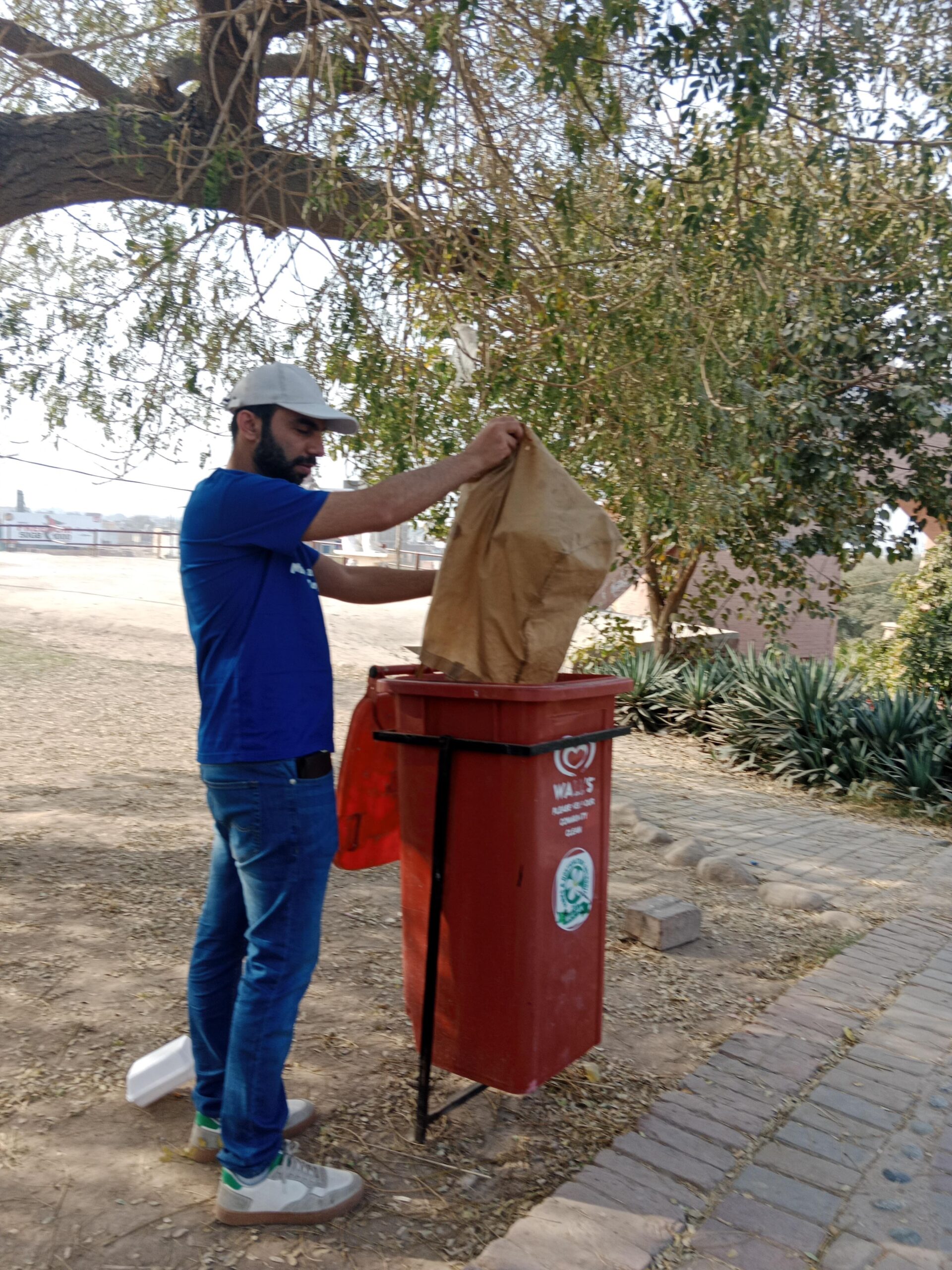
I started gathering the leftover boxes and waste from our group, but then I noticed even more trash left by other visitors in the garden. Instead of walking away, I decided to pick it all up. I gathered everything into a bag and carried it to the designated trash box to discard it properly.
Some people might think picking up trash is a small thing compared to “countering violent extremism,” but they are connected. Both require a habit of care and responsibility.
If we want to avert climate disasters for future generations—and for ourselves when we are old—we must change our habits today. Climate change is a slow-moving disaster that will affect our security and peace in the future. By simply learning to discard our waste properly and keeping our environment clean, we are contributing to a larger movement to protect the planet.
My commitment to the planet is rooted in my academic background. Having studied Agriculture and Food at MNS University, I learned early on the delicate balance between our soil, our food systems, and the climate. This formal education, combined with specialized climate trainings I participated in later, opened my eyes to the reality of environmental degradation. Since then, I have made it a personal mission to implement these lessons in every part of my life.
I apply a “zero-waste” philosophy to every activity I organize or attend. Whether it is a high-level training on health or a community session on human rights, I ensure that waste management is part of the agenda. I believe that we cannot advocate for human rights while ignoring the rights of the earth. In my personal life, I am conscious of every piece of waste I produce, choosing to recycle and discard properly whenever possible.
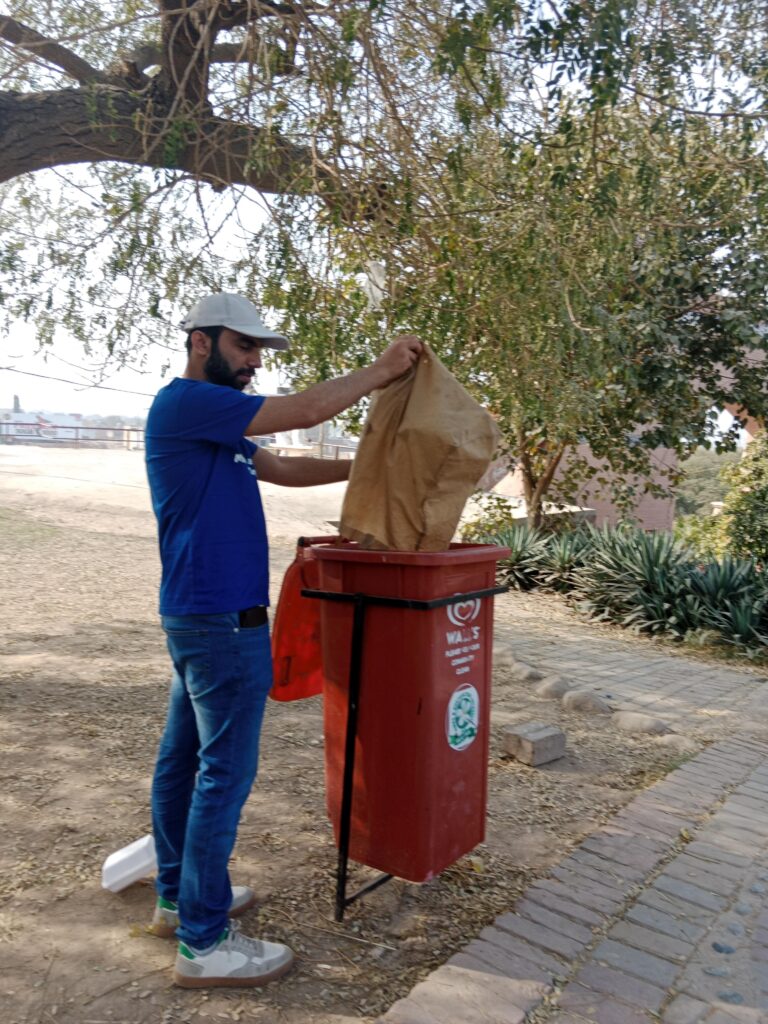
It is this discipline that leads to those beautiful, quiet moments—like the one at Kohna Qasim Bagh—where I can turn a guest speaking engagement into a practical act of service. For me, picking up that trash was not a chore; it was a reflection of my education and a small, necessary step toward a sustainable future for all of us.
Young people often ask how they can change the world. My answer is: start with your own hands. Whether it is speaking up for a minority group or picking up a plastic bottle in a park, every action counts. We cannot have a peaceful society if we do not respect the land we live on.
Let’s make it a habit to leave every place better than we found it. That is the only way we can ensure a healthy and safe world for the generations to come.
Leave a Reply
You must be logged in to post a comment.