The Architecture of Isolation: When the Sanctuary Becomes a Solitary World
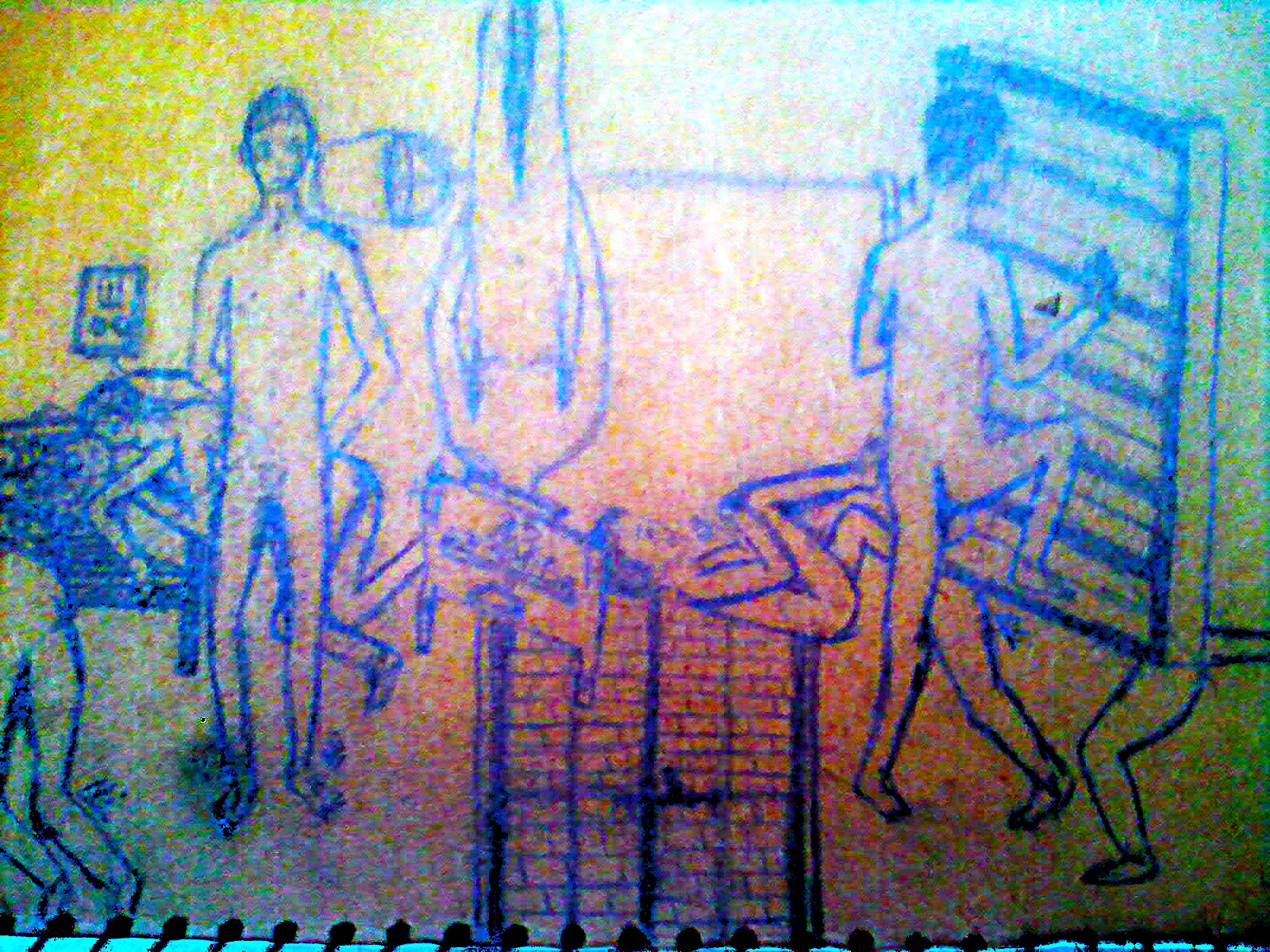
The artwork I am most proud of and the one you can see featured in the gallery on my website is a very personal piece. I drew it on the thick cardboard cover of an old notebook. If you look closely at the image, you can still see the holes on the side where the metal rings used to hold the pages together.
Year: 2013
Medium: Sketch
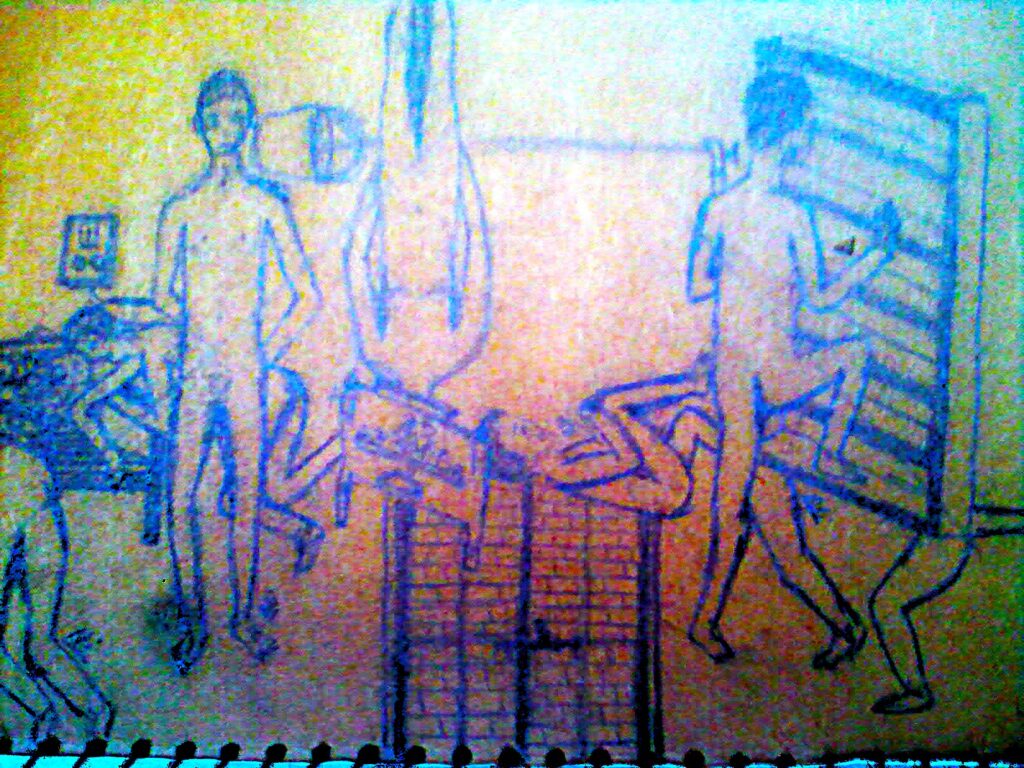
In this sketch, I used my own naked body as the subject. I drew myself in many different positions within a room, but it isn’t a normal room. My body merges with the furniture. In one part, my body is upside down, and instead of a head, it merges into the wood of a bed. In another part, my leg is resting on a brick cupboard built into the wall, but the cupboard itself has human legs.
This image is more than just a sketch of a room; it is a guide. It is my own version of a “Kamasutra.” The different positions of my body throughout the room represent different sexual positions and the connection between the physical self and the space we inhabit. In the center, there is a metal grill door, and to the left, a bed where different versions of my naked self interact.
In this composition, the human form begins to surrealistically merge and melt into domestic furniture. The boundary between the body and the room disappears. The safe space of a bedroom transforms from a temporary sanctuary into a permanent landscape of isolation. The individual seeks intimacy not in community, but in absolute solitude, finding comfort only within their own walls and distant memories.
This work introduces the concept of “internalized romance”, the quiet, melancholic transition from shared human connection to a completely solitary domestic life. The furniture represents the cold, unmoving realities of daily routine, while the figures express a deep yearning for a touch that they have denied themselves out of fear. It invites viewers to think about the invisible walls we build around ourselves to stay safe from a judgmental world.
Read blog about the background and history of artwork here
Leave a Reply
You must be logged in to post a comment.