
As a peace activist operating within high-risk, extremist environments, I have witnessed firsthand how radical groups manipulate identity to fuel violence. To counter this effectively, our local grassroots efforts must be backed by rigorous, global structural accountability.
Recently, through the iDove Program, I had the privilege of attending an eye-opening interactive session led by the United Nations Office of Counter-Terrorism (UNOCT). The guest speaker, Sara Negrao (Head of the Gender Unit and Gender Adviser at UNOCT), provided invaluable insights into the strategic, operational frameworks the UN uses to dismantle the gendered mechanics of violent extremism.
The session centered on key strategic mechanisms and how local activists can leverage them to protect vulnerable gender and sexual minorities in hostile environments.
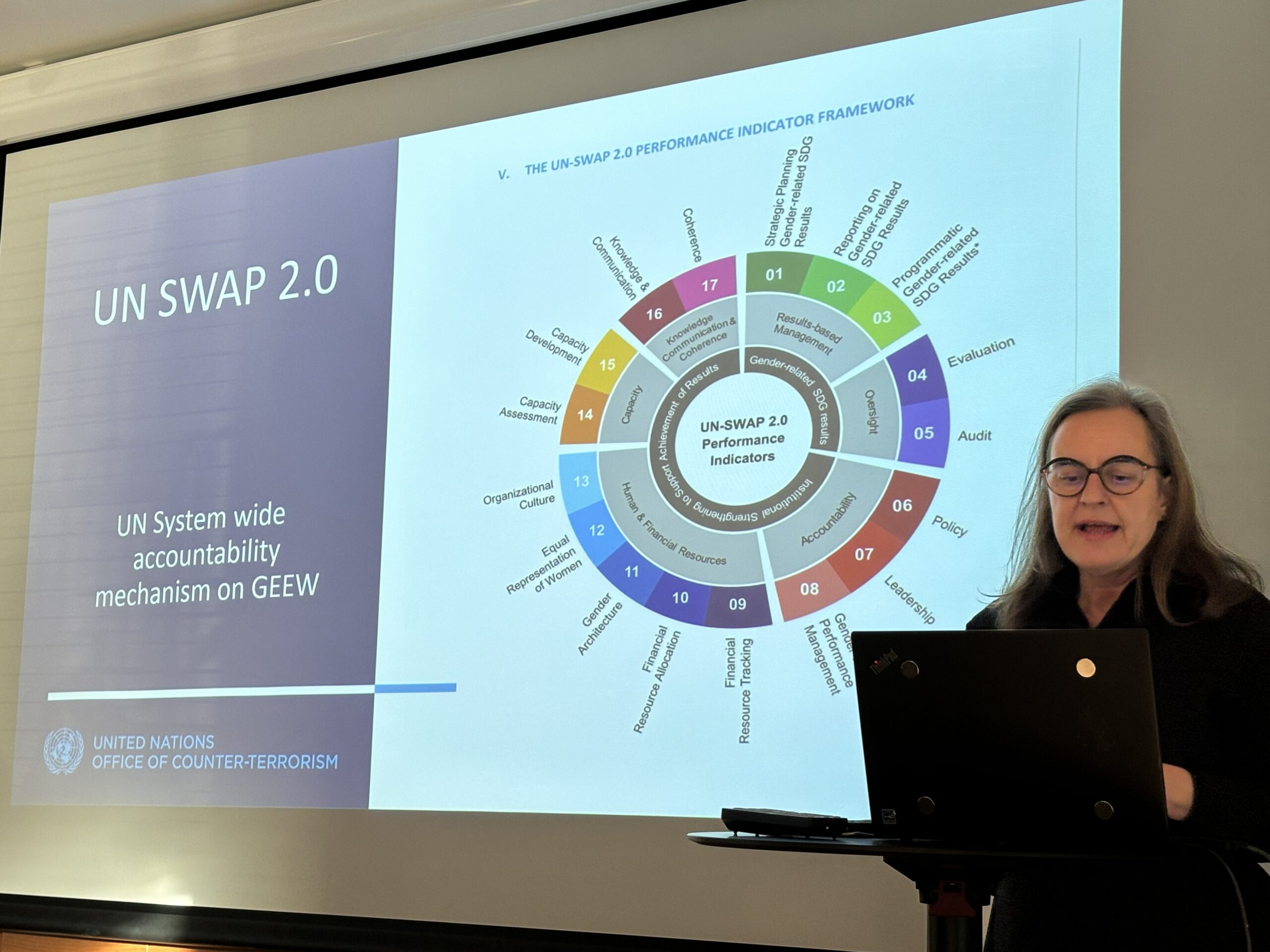
UN SWAP 2.0
One of the most actionable highlights of the session was the breakdown of UN SWAP 2.0 (United Nations System-wide Action Plan on Gender Equality and the Empowerment of Women). Coordinated globally by UN Women, this framework functions as an institutional accountability scorecard. It requires UN entities to measure, monitor, and aggressively push toward standardized gender equality milestones.
For local activists and civil society organizations (CSOs), UN SWAP 2.0 is more than an internal UN checklist—it is an advocacy tool. When designing Preventing and Countering Violent Extremism (PVE/CVE) initiatives, we can cite these exact accountability standards to:
- Demand greater transparency in the distribution of localized security funds.
- Ensure that international peacebuilding programs targeting our regions explicitly budget for intersectional needs.
- Hold local project implementation teams accountable to international standards of gender parity and inclusivity.
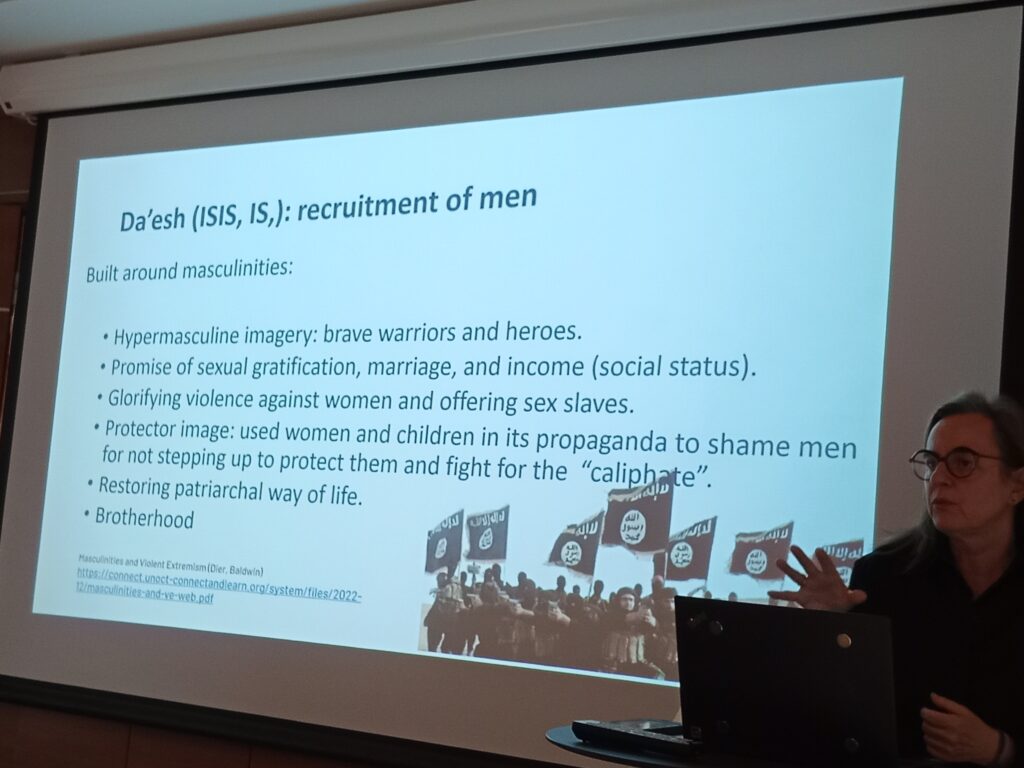
Extremism from Hypermasculinity
Sara Negrao illustrated why gender-blind counter-terrorism fails by analyzing the recruitment strategies of terrorist networks like ISIS. ISIS famously utilized hypermasculine imagery, weaponized misogyny, and strict, violent gender binaries to recruit young men and enforce control over communities.
In highly conservative or extremist environments, gender and sexual minorities are often the primary targets of this weaponized hypermasculinity. When violent groups define “manhood” through dominance and the elimination of variance, minorities face existential threats. By understanding this tactic, PVE/CVE practitioners can build targeted narrative interventions that dissect, challenge, and strip these extremist aesthetics of their power.
During the session, the definition of gender mainstreaming was clarified within the specialized context of counter-terrorism. It is not a passive effort to “include more women” in security meetings. Rather, gender mainstreaming at UNOCT is a systematic, human-rights-compliant approach that builds gender and intersectional analysis into every single policy, program, and security assessment from its inception.
Through specialized instruments like the digital Gender and Identity Factors Platform (GIFP), UNOCT actively pushes for context-specific security initiatives. For activists on the ground, this means we must continuously integrate intersectional data—accounting for gender, sexual orientation, age, and localized tribal or socioeconomic dynamics—into our field reporting.
The iDove platform thrives on a multi-stakeholder approach to peacebuilding. Armed with macro-level frameworks like UN SWAP 2.0 and structural definitions of gender mainstreaming, we are better equipped to protect marginalized minorities. True prevention requires us to subvert the rigid gender roles that extremists rely upon, replacing them with inclusive spaces where everyone is secure.
Leave a Reply
You must be logged in to post a comment.